Proudly engineered with Alpine® software and systems
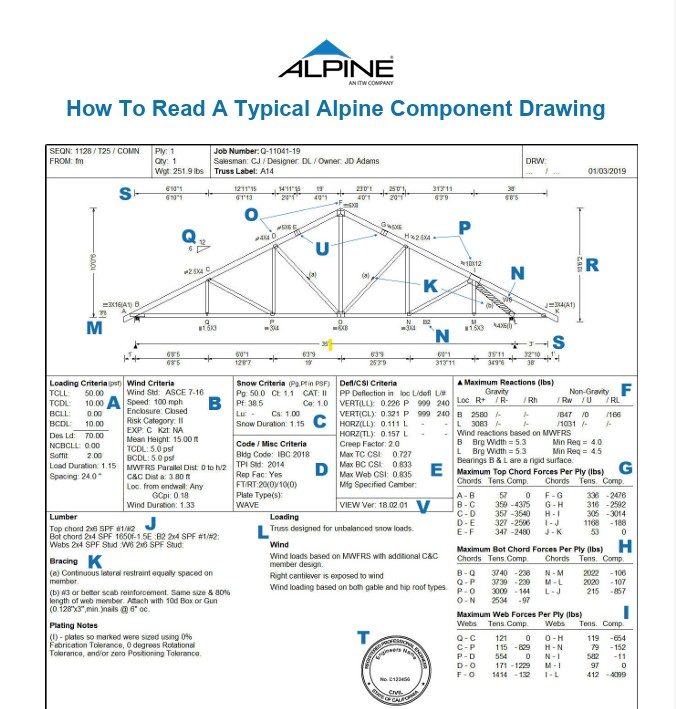
When you receive your truss drawings and calculations from Copperstate Truss, you’re looking at the result of an advanced design process backed by Alpine Engineering, a division of ITW — one of the most trusted structural technology companies in the industry. These reports can look intimidating, but once you know what each section means, you’ll see how much care and precision go into every truss we produce.
Why It Matters
Your home or building relies on trusses that perform safely and efficiently under load. Every truss we design is engineered to meet strict building codes for wind, snow, live, and dead loads, as well as deflection limits that keep your structure sound and level over time.
Our Alpine-calculated reports document those design decisions so you can verify exactly what’s supporting your roof system.
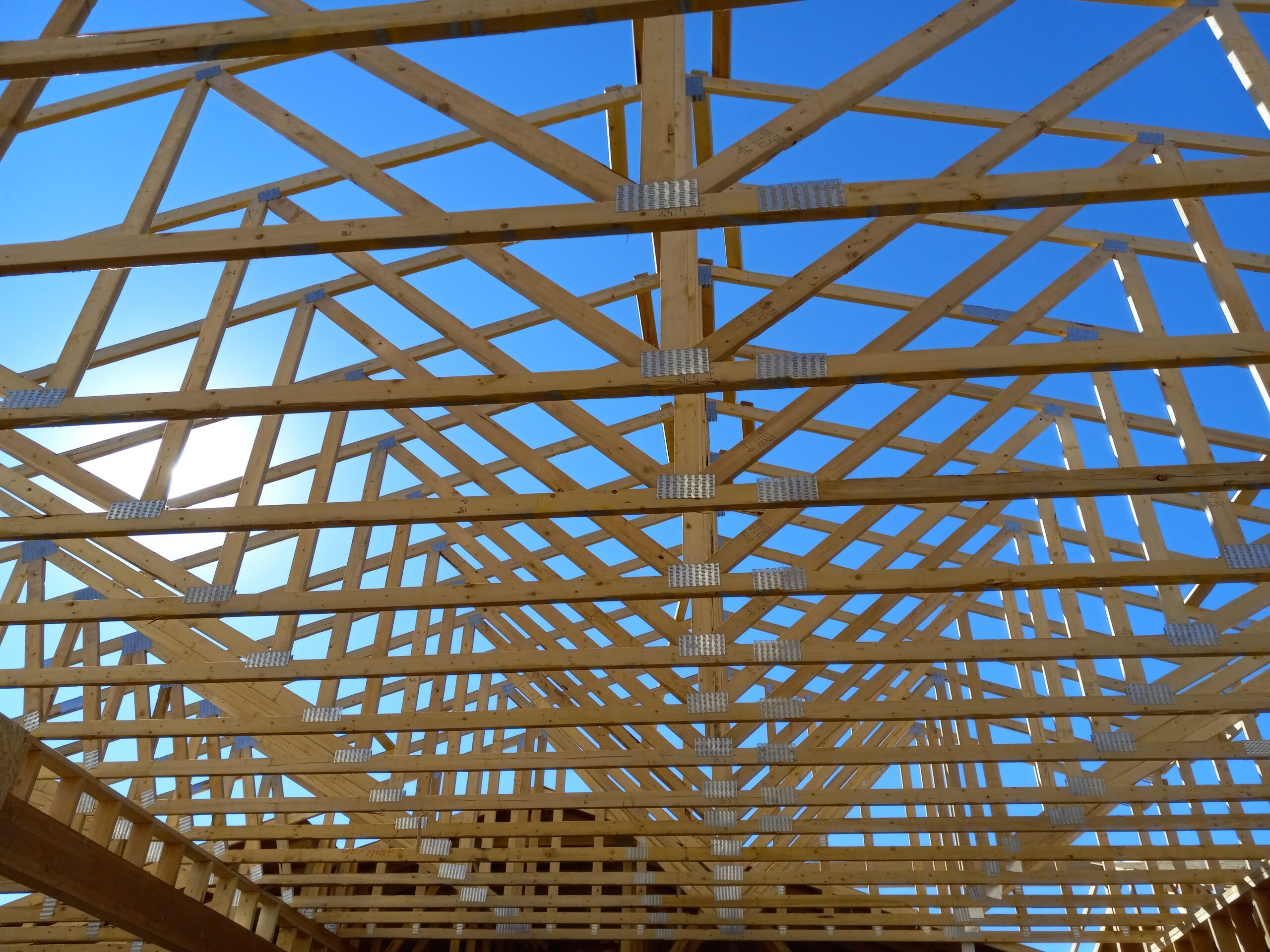
Installed wood trusses in Phoenix Arizona
Breaking Down the Alpine Truss Report
1. Design Criteria
The top section outlines the conditions under which your truss was engineered:
Load values: Live (L), Dead (D), Wind (W), Snow (S), and Ceiling (C).
Building Code Reference: Shows which code version (e.g., 2021 IBC/IRC) was used.
Lumber and Plate Grades: Specifies the strength class of the materials used.
2. Geometry & Span
The diagram displays your truss layout, including:
Overall span and roof pitch
Panel points where members connect
Bearing locations (where the truss transfers load to walls or beams)
This section gives builders and inspectors a clear visual of how your truss fits within the structure.
3. Loading Diagram
Arrows and numbers represent how loads act on the truss. Reactions at each bearing point tell you how much weight each support must carry — critical for verifying proper wall and foundation design.
4. Member Forces & Deflection
Each chord and web member is analyzed for:
Tension/compression values
Deflection limits (e.g., L/240 or L/360)
This ensures your roof system performs within industry-standard tolerances and feels solid even under extreme conditions.
5. Engineer’s Seal & Approval
Every Alpine calculation package is reviewed and digitally sealed by a licensed structural engineer. This final step certifies that your trusses meet both design intent and code requirements.
Where to Learn More
Want to dive deeper into reading truss drawings? Alpine offers a fantastic reference guide: